©2024 淇嘉. All Rights Reserved.
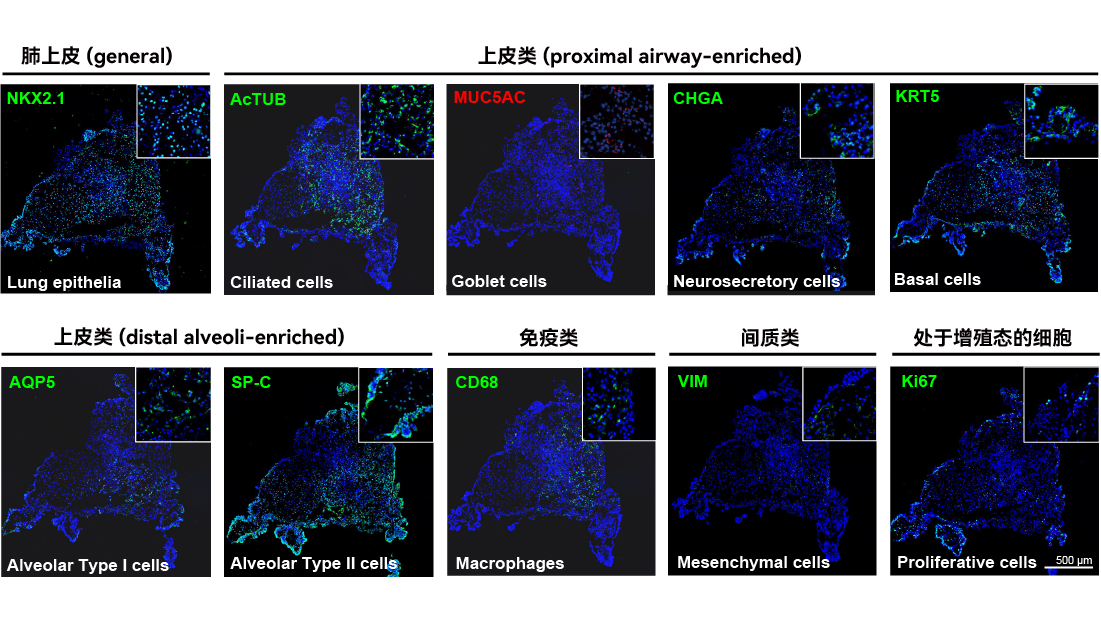
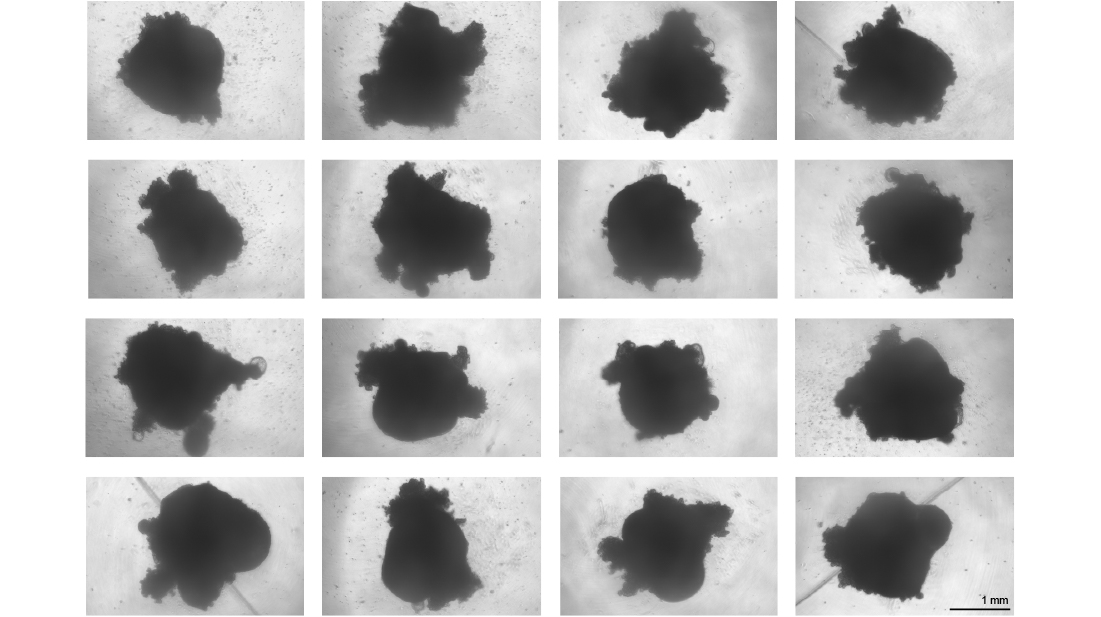
仿生性:富含呼吸道近-远端细胞,涵盖了上皮-间质-免疫三大类。包括肺泡I型细胞 (AQP5+)、肺泡II型细胞 (SP-C+)、纤毛细胞 (AcTUB+)、杯状细胞 (MUC5AC+)、基底细胞 (KRT5+)、肺神经内分泌细胞 (CHGA+)、肺上皮细胞 (NKX2.1+)、巨噬细胞 (CD68+)、间质细胞 (VIM+)、以及Ki67+细胞等10余种细胞类型
Matrigel-free:悬浮式培养,完全脱胶
长期维持:可功能性维持20天
“即用型iPSC源肺类器官 (d-model)”是一款新型的仿生呼吸道类器官产品,通过人类肺脏发育过程的关键信号通路,经过诱导分化产生。相比即用型iPSC源肺类器官 (s-model)版本 (Cat.3d0110),d-model在具备原有的10余种肺细胞类型的基础之上,实现了彻底的脱胶培养。这不仅免去了在传统方法中的基质胶包被处理、分析前脱胶处理等繁琐操作,更提升了检测结果的一致性及稳定性,因此尤其适合用于高精准需求的肺部疾病模拟、药效测试、毒性评价、及再生相关研究。
| 遗传信息 | |||
| • 类器官类型: | • 来源: | • 性别: | |
| 肺类器官 | 成纤维细胞 | 女 | |
| • 捐助者状态: | • 年龄: | ||
| 健康 | 20 |
Characteristics
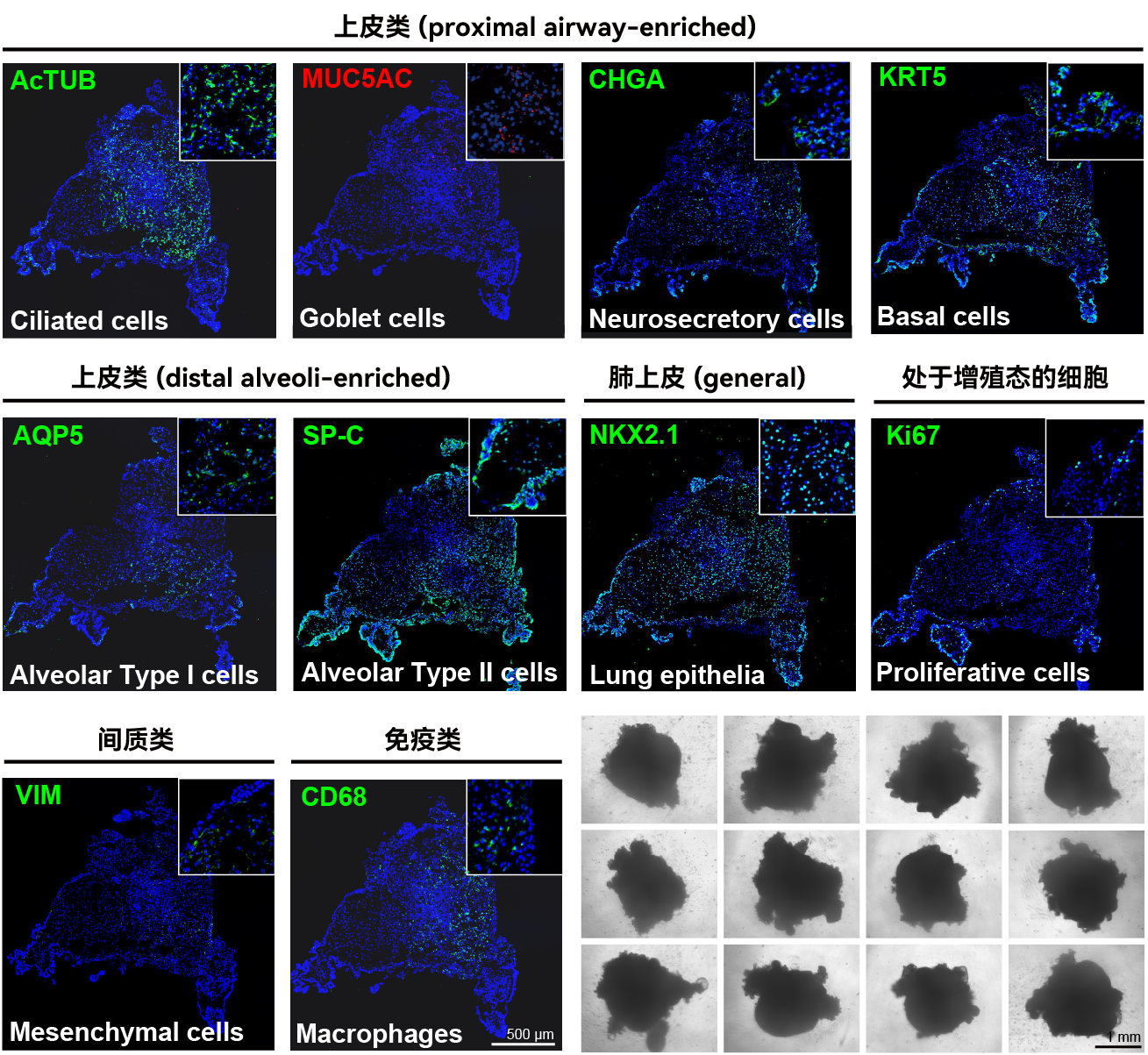
Immunofluorescence staining of an iLung 2.0 model (day 50) demonstrated the presence of almost all the cell types enriched in the proximal airway and distal alveoli, including pulmonary epithelium (NKX2.1+), ciliated cells (AcTUB+), goblet cell (MUC5AC+), basal cells (KRT5+), neuroendocrine cells (CHGA+), alveolar type I cells (AQP5+), alveolar type II cells (SP-C+), resident macrophages (CD68+), mesenchymal cells (VIM+), as well as a small proportion of proliferative cells (Ki67+). Scale bar = 500 μm.
Application of iLung Organoids
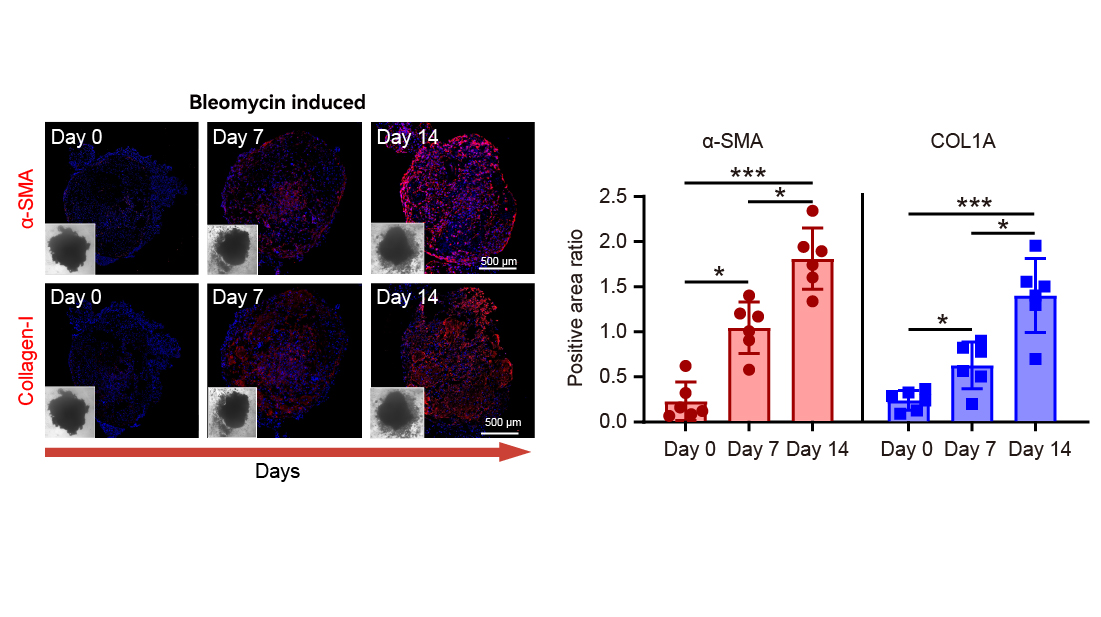
Model 1 (BLM-based):使用 100 μM bleomycin 进行肺纤维化造模
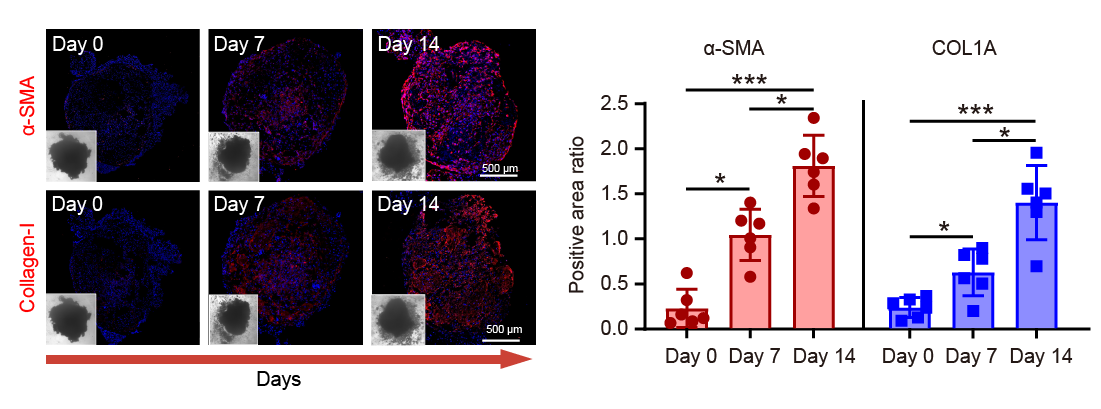
Compared with Day 0 group, a 14-day treatment with 100 μM bleomycin significantly induced the expression of α-SMA, a key myofibroblast marker and major contributor to extracellular matrix (ECM) production. This led to extensive collagen-I accumulation in the iLung 2.0 model, as confirmed by immunofluorescence staining. Scale bar = 500 μm.
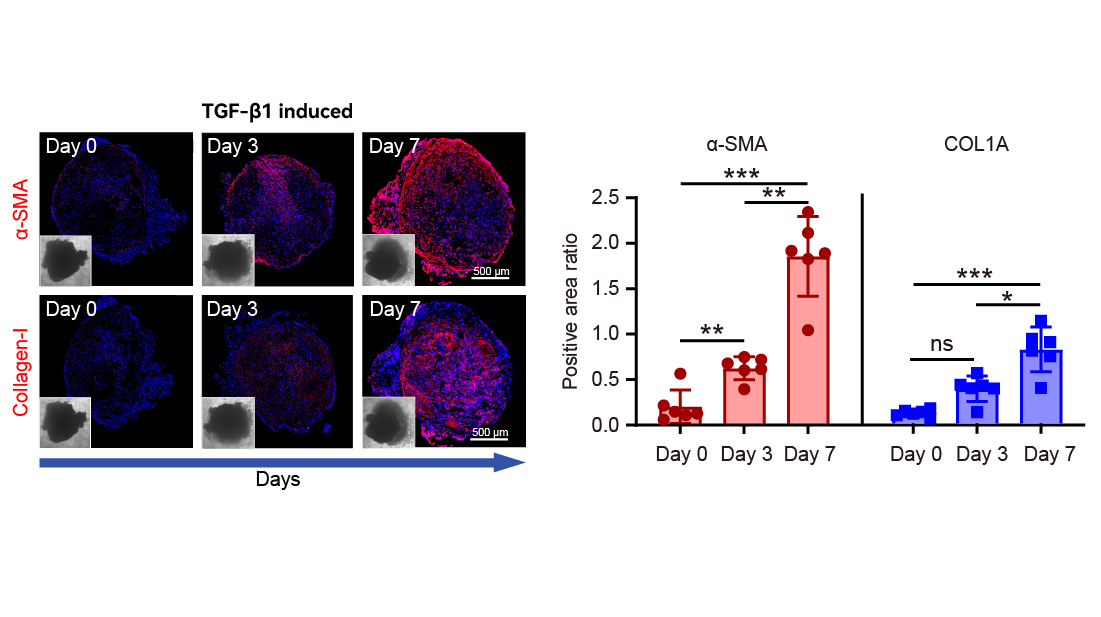
Model 2 (TGF-based):使用 10 ng/ml TGF-β1 进行肺纤维化造模
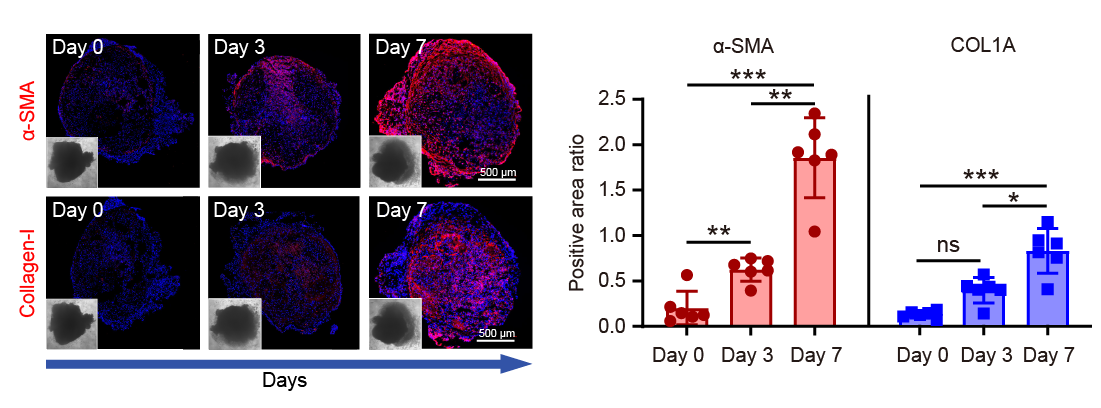
Induction with 10 ng/ml TGF-β1 — a master regulator of pulmonary fibrosis — accelerated the fibrotic process, completing the modeling in ~ 7 days as opposed to 14 days that needed for the BLM-based method. Consistent with this accelerated phenotype, a significant up-regulation of the key myofibroblast marker α-SMA and its downstream product Collagen-I was also evident in iLung 2.0 model. Scale bar = 500 μm.